


The Ghost Bride of Fuvahmulah Who Waited 100 Years
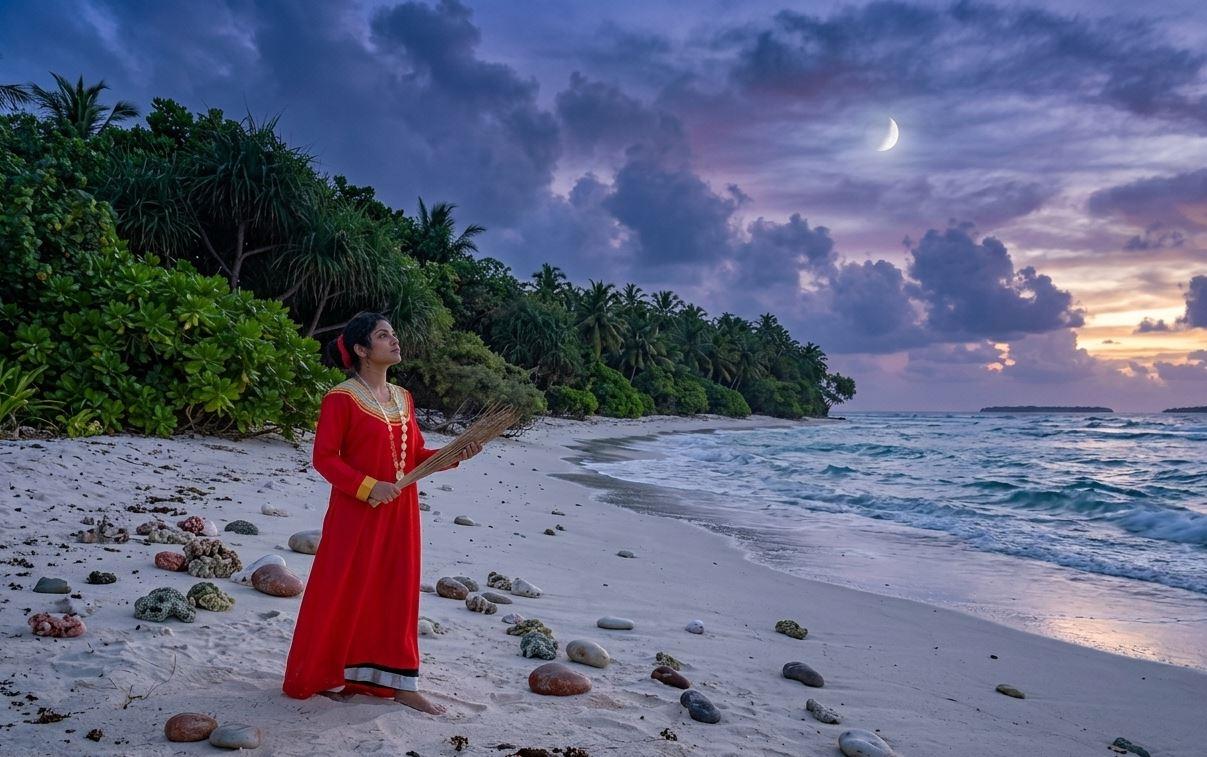
The Maldivian island of Fuvahmulah is famous for its lush wetlands, equatorial beauty, and deep ocean drop-offs. But beneath its tropical tranquility lies one of the most chilling island legends ever told: the tale of the Ghost Bride who waited 100 years.
If you wander near the Kilhi (wetlands) after sunset when the sea mist rolls in, locals say you might hear the soft, rhythmic rustle of silk and a faint, mournful song.
This is the story of Mariyam—a love story cut short by tragedy, and a century-long haunting that still echoes across the island.
The Sunset Wedding That Never Happened
In the 1920s, long before luxury resorts and modern speedboats connected the Maldivian atolls, Fuvahmulah was a remote, self-contained world governed by the tides.
Mariyam, the daughter of a respected island elder, was known throughout the southern atolls for her radiant beauty and gentle spirit. She was betrothed to Hassan, a brave young seafaring trader. Their love was legendary, and their upcoming wedding was set to be the grandest celebration the island had seen in generations.
On the morning of their wedding, Mariyam dressed in a breathtaking, traditional Libaas adorned with intricate gold thread. She wore silver bangles that chimed with every step and a delicate veil woven from fine silk.
Hassan had sailed to a neighboring atoll to retrieve a sacred wedding gift—a polished pearl necklace. He promised to return before the evening call to prayer.
As the sun began to dip below the horizon, painting the sky in violent shades of crimson and violet, Mariyam waited on the eastern shore.
Hassan’s boat never arrived.
The Dark Night of the Storm
Unbeknownst to the waiting bride, a sudden, fierce tropical storm had battered the southern waters. Hassan’s vessel was capsized by a rogue wave, swallowed whole by the deep, dark abyss of the Indian Ocean.
When news of the shipwreck reached Fuvahmulah, Mariyam refused to accept the truth. She believed Hassan was stranded on an outer reef and would come home to her.
Day after day, month after month, Mariyam walked down to the shore in her wedding dress, staring out into the endless blue horizon. As years bled into decades, her mind fractured under the weight of grief. She grew old, but she never took off her wedding garments, nor did she ever leave her post by the water.
When Mariyam passed away in her sleep nearly fifty years later, she was buried near the edge of the island's inland lake. But her spirit remained anchored to the promise Hassan had made.
"I will return before the sun sets," he had whispered.
And so, she waited.
The Century Mark: 100 Years Later
Fast forward to the modern era. Exactly one hundred years after the day Hassan’s boat vanished into the sea, a young photographer named Amin visited Fuvahmulah to document its unique wildlife and landscapes.
Unaware of the local folklore, Amin ventured out late one evening near the island's central wetland area to capture night-sky long exposures. The air was unusually still, and a thick, unnatural fog hung low over the water.
At precisely 11:42 PM, Amin’s camera caught something unusual in the viewfinder.
Through the haze stood the figure of a woman. She was dressed in an antique Libaas that gleamed softly under the moonlight. Silver bangles jingled clearly through the silent night.
Thinking it was an islander in traditional dress, Amin called out. The figure slowly turned.
Amin’s blood ran cold.
Where her face should have been, there was only a pale, glowing void shadowed by a dark veil. Yet, he felt a desperate, suffocating sorrow radiating from her presence. She raised a pale, frail hand, pointing toward the roaring ocean waves in the distance.
Panic seized Amin. He dropped his tripod, turned, and ran blindly back toward the village, the faint sound of weeping following him through the palm trees.
The Curse and the Legend Today
When Amin recounted his experience to the elders at a local tea shop the next morning, their faces turned pale.
"You saw the Geydhagandu Bride," an elder whispered softly. "Last night was the hundredth year."
According to local folklore, Mariyam’s spirit is not malicious, but she is bound by an eternal vigil. It is said that anyone who meets her gaze near the water late at night will experience a sudden, overwhelming sense of heartbreak—a fleeting taste of the century of grief she bore alone.
Some islanders claim that on full moon nights, if you stand very quietly by the shore, you can still see a lonely silhouette in a golden gown, patiently watching the waves, waiting for a groom who will never come home.
Frequently Asked Questions About Fuvahmulah Myths
-
Is the Ghost Bride of Fuvahmulah real?
While the Ghost Bride is a popular piece of Maldivian folklore (Dhivehi fanvathi), ghost stories and spirits (Fanditha and Dheyvi) are a rich part of traditional Maldivian culture and storytelling.
-
Where is Fuvahmulah located?
Fuvahmulah is a unique, one-island atoll located in the southern hemisphere of the Maldives, famous for its freshwater lakes, tiger sharks, and rich cultural history.
-
Can visitors explore the wetlands in Fuvahmulah?
Yes! The Kilhi (wetlands) are a protected nature reserve and a popular tourist spot during the day, though locals advise caution when exploring remote island areas after midnight.
- News
- Technology
- Health
- Science
- Travel
- Food & Recipes
- Lifestyle
- Entertainment
- Gaming
- Business
- Educación
- Finance
- Automotive
- Pets & Animals
- Sports
- Fashion
- Beauty
- Home
- Relationships
- Kids
- Directorio
- Nature
- Religion
- Culture
- Photography
- Art & Design
- Real Estate
- Shopping
- Parenting
- Jobs & Careers
- Legal
- Environment
- How-To
- Guides
- Opinions
- Viral
- Maldives
- Folklore
- Romance
- Horror
- Humor
- Inspirational
- Vista previa
- Quizzes
- Lists
- Miscellaneous
- Viral

 English
 Arabic
 French
 Portuguese
 Deutsch
 Turkish
 Dutch
Dutch
 Italiano
 Russian
 Romaian
 Portuguese (Brazil)
 Greek
Greek