


Imagine Living for 500 Years: How Centuries of Life Would Transform Humanity
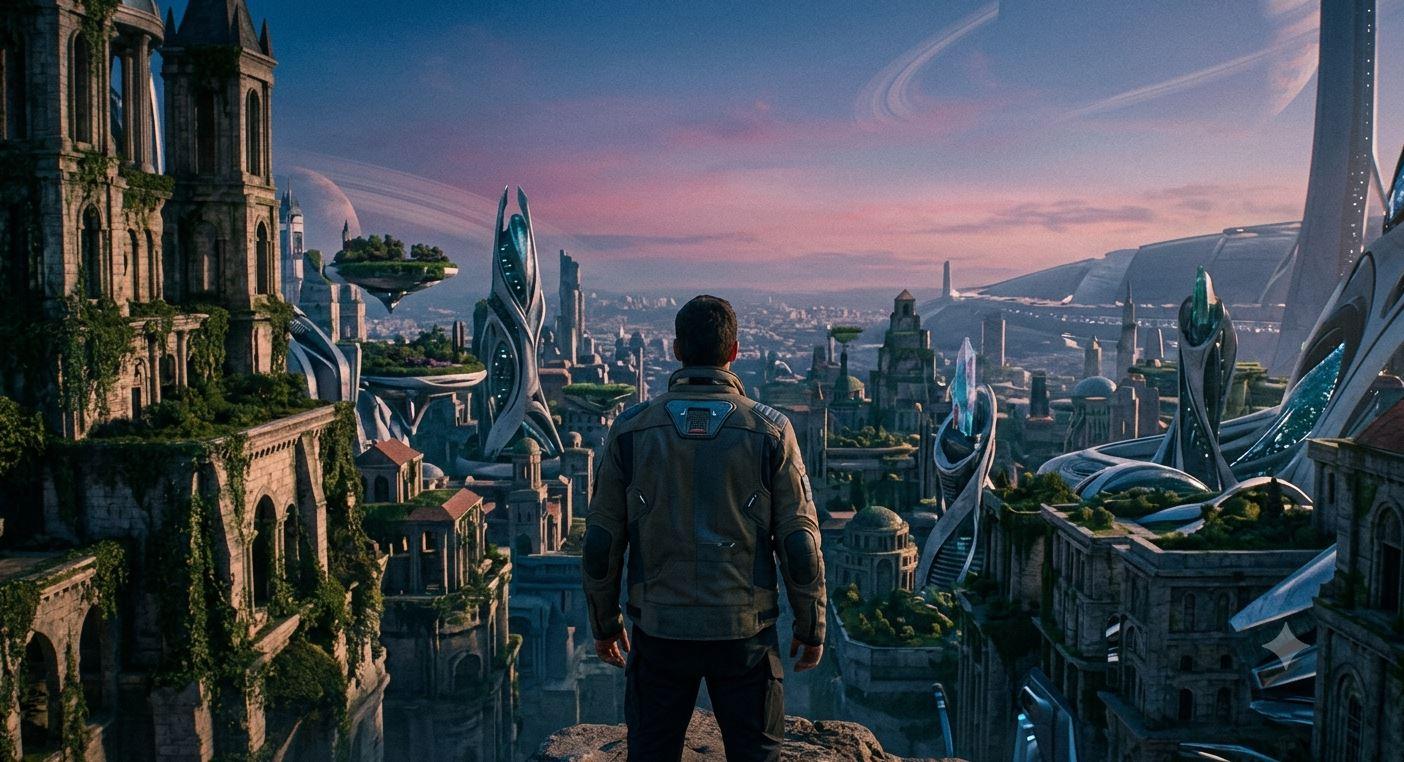
Imagine blowing out 500 candles on your birthday cake. You’ve lived through five distinct centuries, watched civilizations rise and fall, mastered dozens of careers, and seen technology evolve beyond your wildest childhood dreams.
While half a millennium of life sounds like the plot of a sci-fi novel, breakthroughs in longevity science, cellular reprogramming, and anti-aging biotech are pushing researchers to ask a fascinating question: What would human society actually look like if we lived for 500 years?
Living for five centuries isn't just about adding more years to your life; it’s about fundamentally reinventing what it means to be human. Here is how a 500-year lifespan would overhaul our careers, relationships, psychology, and planet.
1. The Death of the "3-Stage Life"
Today, our lives follow a predictable linear path: Education $\rightarrow$ Career $\rightarrow$ Retirement. We rush through our twenties, grind through our middle age, and hope to enjoy a couple of relaxing decades before the end.
With a 500-year lifespan, this rigid model completely dissolves.
-
Multiple Life Chapters: Instead of a single 40-year career, you might have five or six distinct century-long eras. You could spend your first 80 years as a marine biologist, your second century as an architect on Mars, and your third dedicated entirely to classical music.
-
Redefining Retirement: Retirement as we know it would vanish. Why retire at 65 when you have 435 years left? Instead, society would shift toward sabbatical cycles—taking decade-long breaks every 50 to 100 years to rest, reinvent, and re-educate yourself.
2. Relationships, Marriage, and the Family Tree
How does "till death do us part" work when death is five centuries away? Longevity would trigger a massive paradigm shift in human connection.
Serial Companionship
While some couples might manage to stay together for centuries, human dynamic shifts suggest that serial long-term relationships would become the norm. A 70-year marriage might be seen as a successful "chapter" rather than a lifelong guarantee, with people renegotiating relationship contracts every few decades.
Massive Family Networks
Imagine attending a family reunion where seven or eight generations are all alive, healthy, and thriving simultaneously. You could grab coffee with your great-great-great-great-great-grandchild—who might look just as young as you thanks to cellular regeneration.
3. Psychology: The Mind Over 500 Years
The human brain evolved to process decades of memory, not centuries. Living for 500 years presents unique psychological challenges and triumphs:
-
The Memory Problem: Would you remember your first love from 350 years ago? Without technological memory enhancements or brain-computer interfaces, early memories would inevitably fade, making your past self feel like a completely different person.
-
Deepened Wisdom vs. Deep Cynicism: On one hand, centuries of experience could yield unprecedented wisdom, emotional maturity, and patience. On the other hand, witnessing recurring historical cycles, wars, and loss over hundreds of years could lead to severe emotional fatigue or apathy.
4. Economic & Environmental Impact
A world where humans live five times longer creates monumental challenges for global resources, economics, and governance.
| Domain | Potential Benefit | Major Challenge |
| Environment | Long lifespans force long-term thinking; people will care about climate change because they will be alive to experience it. | Risk of severe overpopulation and resource depletion if birth rates do not drop drastically. |
| Wealth & Economy | Compound interest over centuries could create immense personal wealth and financial security. | Extreme wealth inequality, as early adopters of longevity technology accumulate unmatched capital. |
| Politics & Progress | Deep institutional memory and experienced leadership. | Political stagnation, where older generations hold power for centuries, blocking social progress. |
5. Will Longevity Science Ever Get Us There?
Living to 500 sounds fantastical, but scientists like Aubrey de Grey and institutions exploring senolytics, gene editing (CRISPR), and telomere extension are actively working on reversing cellular decay.
The goal isn't just to stretch out old age, but to extend healthspan—ensuring a 400-year-old body functions with the vigor, clarity, and cellular health of a 25-year-old.
Final Thoughts: Quality vs. Quantity
Living for 500 years would offer an unprecedented opportunity to explore the cosmos, master endless arts, and build profound wisdom. However, the true value of such a lifespan wouldn't be measured in the sheer quantity of days, but in our ability to preserve our empathy, curiosity, and zest for life across half a millennium.
If you were given a potion today that guaranteed a healthy 500-year life, would you drink it?
- News
- Technology
- Health
- Science
- Travel
- Food & Recipes
- Lifestyle
- Entertainment
- Gaming
- Business
- Éducation
- Finance
- Automotive
- Pets & Animals
- Sports
- Fashion
- Beauty
- Domicile
- Relationships
- Kids
- Stories
- Nature
- Religion
- Culture
- Photography
- Art & Design
- Real Estate
- Shopping
- Parenting
- Jobs & Careers
- Legal
- Environment
- How-To
- Guides
- Opinions
- Viral
- Maldives
- Folklore
- Romance
- Horror
- Humor
- Inspirational
- Aperçu
- Quizzes
- Lists
- Miscellaneous
- Viral

 English
 Arabic
 Spanish
 Portuguese
 Deutsch
 Turkish
 Dutch
Dutch
 Italiano
 Russian
 Romaian
 Portuguese (Brazil)
 Greek
Greek