


The Real Reason Humans Have Two Nostrils
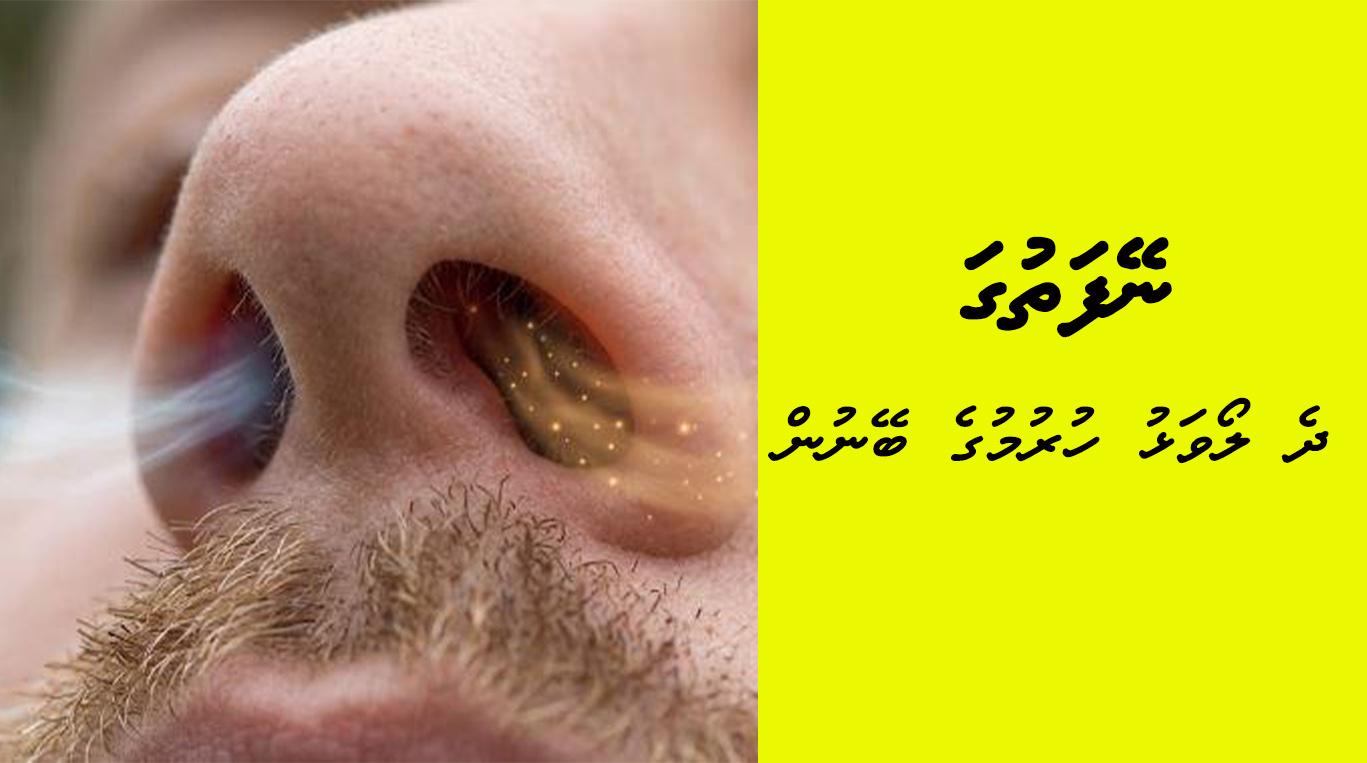
If you take a deep breath right now, it feels like air is flowing evenly through both sides of your nose. But here’s a surprising fact: it almost certainly isn't.
At any given moment, about 80% of healthy humans are doing most of their breathing through just one nostril. A few hours later, without you noticing, your body quietly switches sides.
Why did evolution design us with two separate air intake channels instead of one big, efficient blowhole? It isn't a biological backup system. It’s an intricate mechanism that powers two vital functions: optimizing your sense of smell and protecting your respiratory system from drying out.
1. The Nasal Cycle: Your Body's Internal Shift System
The primary driver behind having two nostrils is a phenomenon called the nasal cycle.
Controlled autonomously by your central nervous system, erectile tissue inside your nose swells and shrinks on an alternating schedule.
-
The Working Nostril: Blood vessels constrict, opening up the passage to allow high-velocity airflow.
-
The Resting Nostril: Blood vessels dilate, causing erectile tissue (the inferior turbinates) to swell slightly, restricting airflow down to a slow trickle.
Every 2 to 4 hours, your nervous system flips the switch.
Why Rest One Nostril?
Breathing exposes sensitive nasal membranes to a non-stop stream of dry, unfiltered air. If both nostrils operated at full capacity 24/7, the delicate cilia (tiny hair-like structures) and mucus linings would dry out, crack, and fail at filtering pathogens.
By cycling between sides, one nostril gets to rest, rehydrate, and recover its protective mucus layer while the other handles the heavy lifting of respiration.
2. Airspeed Dynamics: How Two Nostrils Sharpen Smell
Having two separate nostrils operating at different airflow speeds dramatically expands the range of odors your brain can process.
When you inhale a complex scent—like freshly brewed coffee, rain on warm pavement, or flowers—it is made up of dozens of distinct chemical compounds. How quickly your olfactory receptors (smell sensors) process these compounds depends directly on how fast the air carries them over the nasal lining:
Fast Airflow  ---> High-Absorbing Chemicals (quick capture)
Slow Airflow  ---> Low-Absorbing Chemicals  (needs time to stick)
-
Fast-Absorbing Odorants: Chemical compounds that bind quickly to olfactory receptors need fast-moving air. If the air moves too slowly, the scent molecules get absorbed too early in the nasal tract before reaching the main olfactory zone.
-
Slow-Absorbing Odorants: Chemical compounds that bind slowly need a lazy, slow-moving air stream. High-speed air sweeps them past the receptors before they ever get a chance to latch on and register in your brain.
By maintaining one fast air stream and one slow air stream simultaneously, your nose acts as a dual-rate chemical sorter. This allows your brain to decode rich, multi-layered aromas in a single breath.
3. Stereo Olfaction: Tracking Scents in 3D Space
Just as having two ears allows you to localize sounds (stereo hearing) and two eyes provide depth perception (3D vision), having two nostrils gives you stereo smelling.
Because the two nostrils sit slightly apart and draw air at different speeds, each side receives a subtly different concentration of odor molecules. The brain compares these minute signals from the left and right sides to calculate where a smell is coming from.
While humans rely far less on scent tracking than dogs or rodents, studies show that humans can still follow scent trails on the ground when prompted—a remnant of an evolutionary survival trait designed to detect nearby food or predators.
Quick Summary: Why We Have Two Nostrils
| Mechanism | Main Function | How It Works |
| Nasal Cycle | Tissue Protection | Alternates airflow every 2–4 hours to prevent drying and maintain mucosal health. |
| Differential Flow | Advanced Odor Perception | Creates one fast and one slow air stream to capture both fast- and slow-binding scent molecules. |
| Spatial Separation | Directional Smelling | Allows the brain to compare odor concentration differences between left and right sides. |
Try it yourself: Place your index finger horizontally right below your nose and exhale softly through your mouth closed. You'll instantly feel a significantly stronger puff of warm air coming from one nostril than the other.
- News
- Technology
- Health
- Science
- Travel
- Food & Recipes
- Lifestyle
- Entertainment
- Gaming
- Business
- Ausbildung
- Finance
- Automotive
- Pets & Animals
- Sports
- Fashion
- Beauty
- Startseite
- Relationships
- Kids
- Geschichte
- Nature
- Religion
- Culture
- Photography
- Art & Design
- Real Estate
- Shopping
- Parenting
- Jobs & Careers
- Legal
- Environment
- How-To
- Guides
- Opinions
- Viral
- Maldives
- Folklore
- Romance
- Horror
- Humor
- Inspirational
- Bewertungen
- Quizzes
- Lists
- Miscellaneous
- Viral

 English
 Arabic
 French
 Spanish
 Portuguese
 Turkish
 Dutch
Dutch
 Italiano
 Russian
 Romaian
 Portuguese (Brazil)
 Greek
Greek